

Education & Growing
Natural growing starter guide
Biobizz WorldWide S.L.November 16, 2026
New to natural growing?
Learn the first steps, the products you need and the most common mistakes of a first grow and how to avoid them.
Starting out with natural growing can seem like a lot: growing medium, nutrients, light, water, timing. But it doesn't have to be complicated. Get the basics right and your first cycle can go well. This guide covers the first steps, the materials you need and the most common mistakes of a first grow.
What natural growing really means
Natural growing is based on a simple principle. Instead of forcing growth with aggressive synthetic products, you create a healthy environment for your roots.
First steps in natural growing
The first thing is to choose where you're going to grow. You need a place where you can control light, temperature and humidity. You can use a spare room or a small greenhouse. If you don't have that and you grow outdoors, keep in mind that you'll be more exposed to the unexpected.
Some plants are more tolerant than others, and in a first grow it's normal for things not to go perfectly, because we all start out as beginners. That's why we recommend starting with hardy varieties that cope better with the mistakes that come with learning. For example: leeks, onions, Swiss chard, Brussels sprouts, peas…
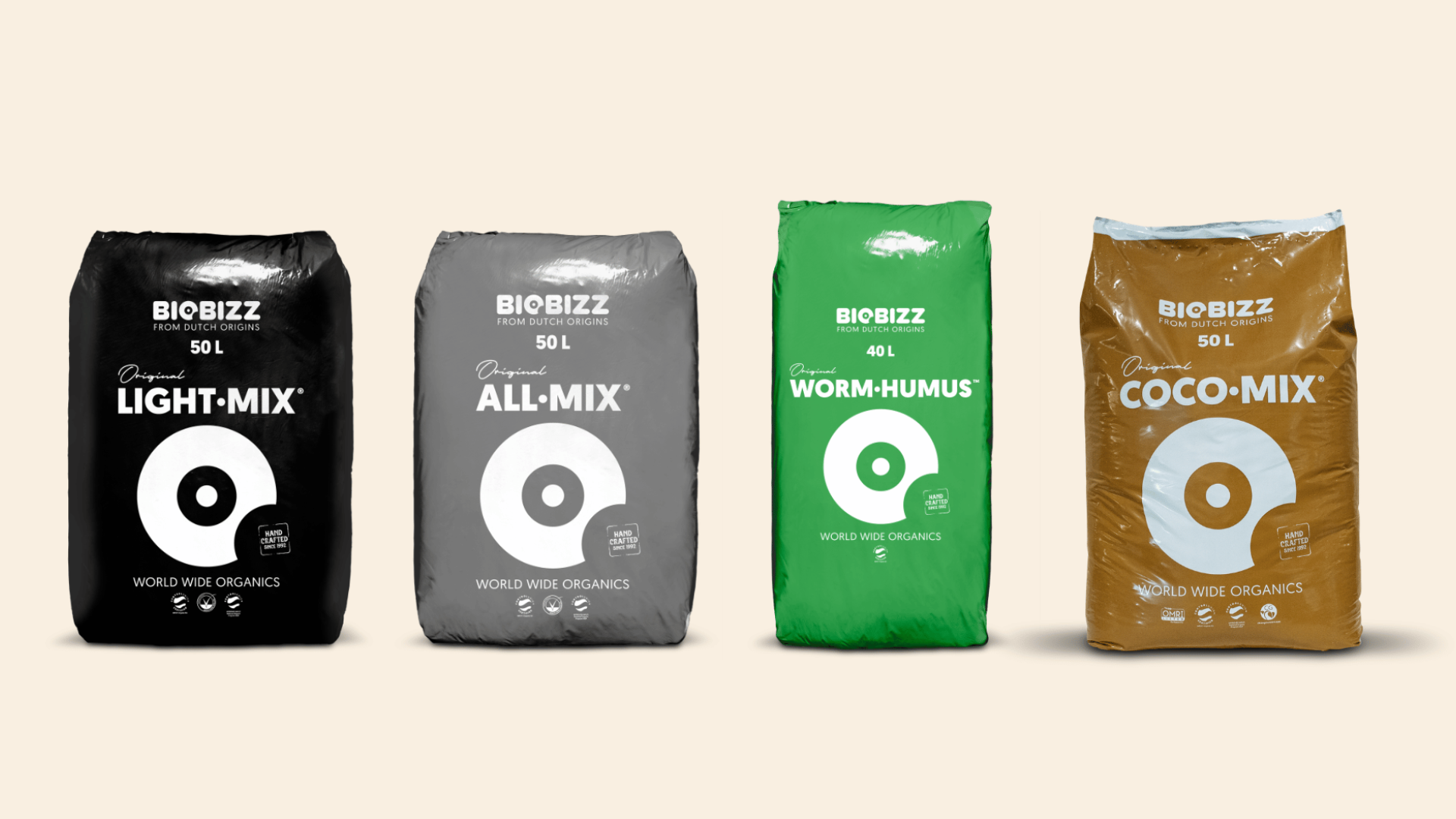
Then comes the growing medium, and this is where Biobizz can help you a lot. For truly natural growing, without minerals or toxins, we work with natural growing media. And with Biobizz's range of growing media you have plenty of options.
If you want full control and to manage your own fertiliser doses from the start, the best option is coco, because it has virtually no fertilisation: you decide everything the plant receives. If you prefer a middle ground, Light·Mix is the ideal growing medium for beginners, since it has a small amount of fertilisation that helps you avoid over-fertilising while you learn. And if you'd rather not be so hands-on and want your plants well fed from the start, All·Mix makes it easier. If you like to experiment, many of our most experienced growers prepare their own mixes, for example combining Coco·Mix with worm humus for a good balance.
What you need before sowing the seeds
Whether you grow indoors or outdoors, in both cases there's a common foundation:
- A good natural growing medium, ready to use
- Natural fertiliser and biostimulants for the growth and flowering stages
- Pots with good drainage
- A pH or EC measuring kit*
*pH controls whether the plant can absorb nutrients, and EC (electrical conductivity) tells you how many nutrients are dissolved in the water. Both are useful, although to start with, pH is usually enough.
Things to consider depending on your type of growing
If you grow indoors
Controlling the environment is easier, so you can focus on nutrition. Start with a growing medium like Light·Mix or All·Mix, depending on what you prefer, Light·Mix has less fertilisation and lets you control the nutrition yourself from the start, while All·Mix comes more loaded and covers the first few weeks on its own. Then a simple range of natural nutrients: Bio·Grow, which accompanies the plant throughout the whole cycle, and Bio·Bloom for the flowering stage. That's all you need for a first indoor cycle.
If you grow outdoors
Keep the season in mind, choose varieties that suit your climate and the time of year. Prepare a spot with good sun exposure and protection from the wind, and make sure the soil drains well. As for Biobizz, the growing medium and the growth and flowering nutrients are the same as indoors, the difference is in the environment, not the nutrition. And if you want to boost root development from the start, Root·Juice is a great ally, especially in the first few weeks.
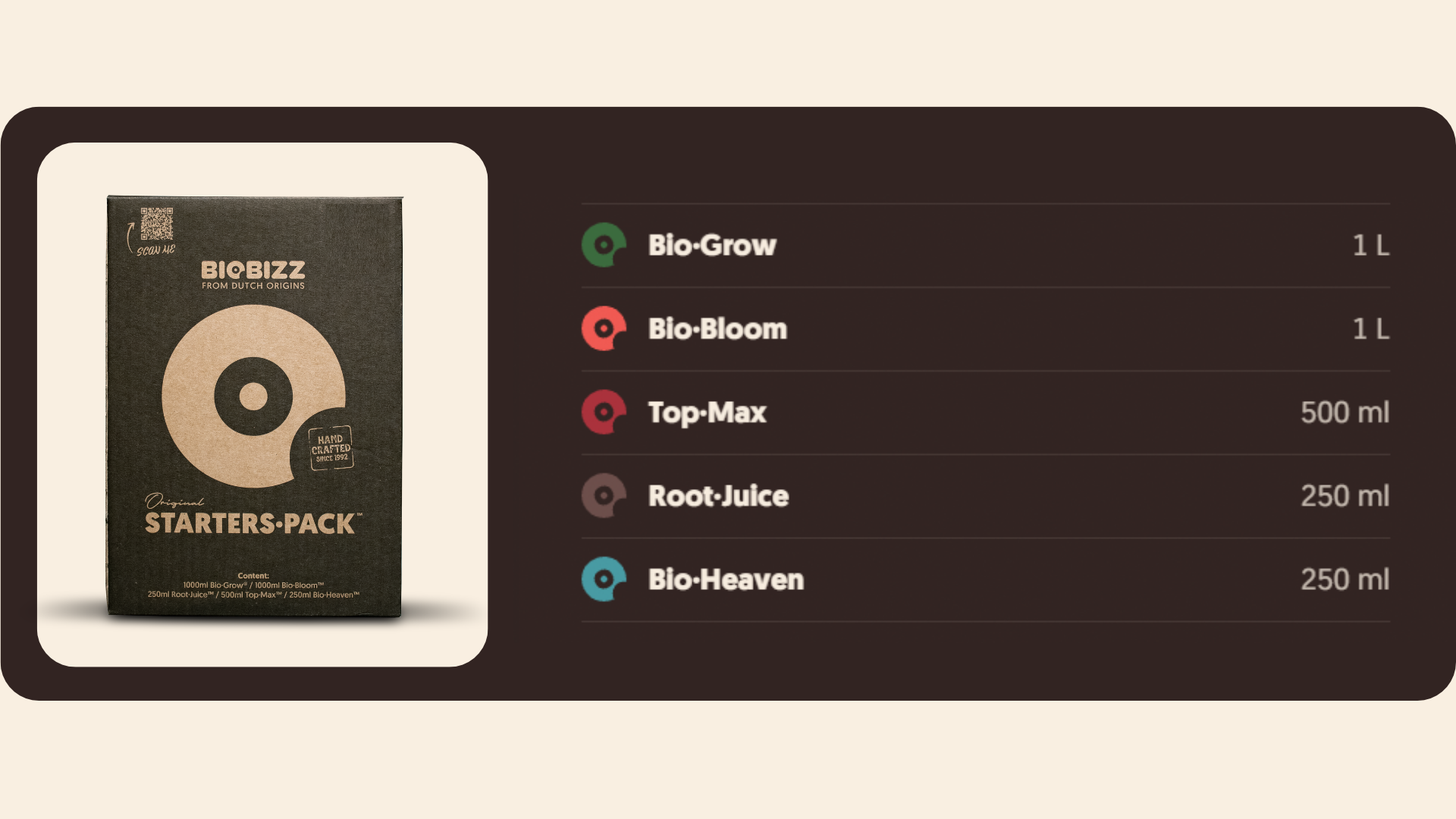
And if you don't want to overthink it... the Biobizz Starter Pack
If all this seems like too much, don't worry, we have the simplest solution. The Biobizz Starter Pack brings together in a single pack everything you need for your first grow: the growing medium, the nutrients for the growth and flowering stages, the biostimulants and everything essential to get started.
The most common mistakes of a first grow
The most common mistake is overwatering. Roots need oxygen, and too much water drowns them. We recommend letting the growing medium dry out a little between waterings, but keeping some moisture. If it dries out completely, it means we've left too long between waterings. To check, stick a finger into the growing medium so you can measure it properly.
The second is overfeeding. Remember that more isn't better. Too much stresses the plant, so start with a low dose and increase it gradually. If you want, you can check the Biobizz feeding charts, which are on the website, they'll help you a lot with how to start in the first few weeks.
The third is impatience. Constantly checking the plant, moving it and adjusting it causes stress. Plants need stability and a consistent routine. And be patient with the timing, vegetables don't come out in two weeks, they can take up to four months to be perfect for harvest.
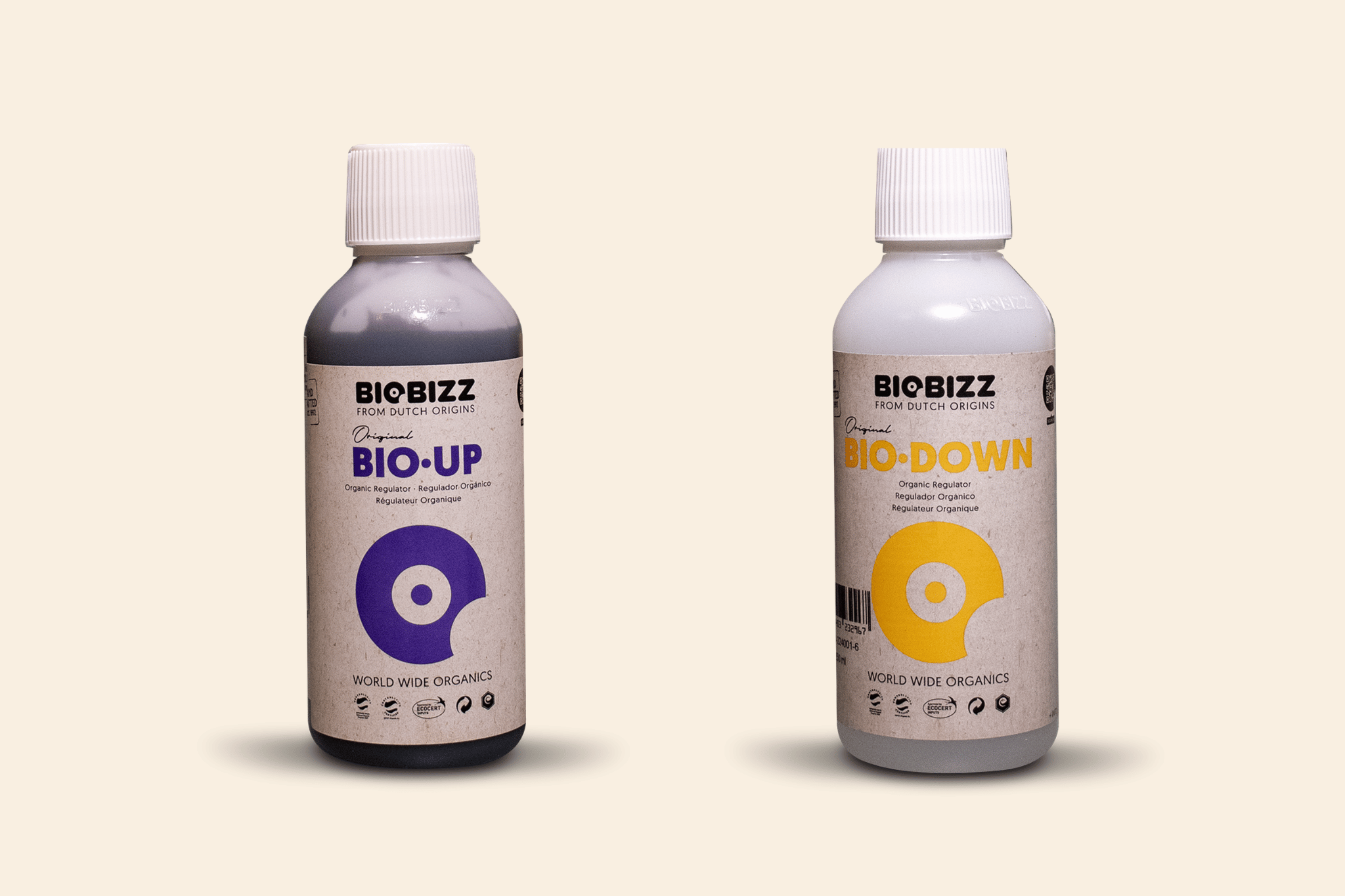
And the one many people forget: the importance of pH and EC. If your water or growing medium is out of range, the plant can't absorb nutrients, even though they're present. So check this regularly. If the pH rises too much, remember we have Bio·Down to lower it, and Bio·Up in case of a sharp drop.
Most common symptoms
Learning to read the signs is the fastest way to improve as a grower. These are the most common symptoms:
- Yellow leaves: could be a nitrogen deficiency if it's the oldest leaves turning yellow, or a lack of light if the stems stretch and the leaves look pale.
- Brown tips: irregular watering or too much watering. Consistency is key.
- Curled or folded leaves: too much light or heat, or a lack of water. It can also be due to a lack of humidity, which shows when the leaf edges are dry, especially the tips.
- Soft stem: overwatering: the roots are rotting. Let the growing medium dry out.
If you notice any of these signs, don't worry, there's usually a solution. Adjust the watering, light or nutrition, and if you have questions, check the Biobizz feeding charts or email us.
The most important thing
Start with a good growing medium, a simple routine and a plant you can manage.
A tip from the Biobizz team: Write down what you do, when you water, how much you feed, what pH your water has. Over time you'll see patterns. And be patient, natural growing is a natural process, and it takes time.
And remember, on our website you'll find the feeding charts and the whole range of products designed to make your first grow a success.